
Parallel Parking Technique (2026 Guide) – Step-by-Step Method for Perfect Parking
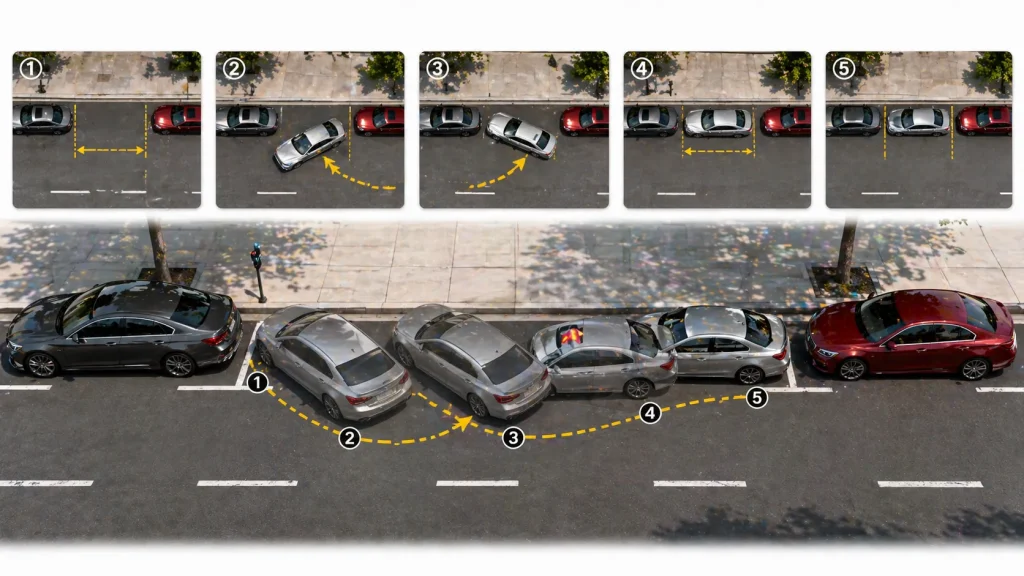
Introduction
parallel parking technique is one of the most challenging skills for beginners because it requires precise steering, timing, and space judgment in tight areas. It’s essential for city driving, roadside parking, and driving tests, where accuracy matters more than speed. In this guide, you’ll learn a proper parallel parking technique, easy methods, and practical tricks to master the skill confidently.
Quick Summary Box
| Type | Driving Technique Guide |
|---|---|
| Skill Level | Beginner to Intermediate |
| Key Focus | Steering angle + positioning |
| Time to Learn | 15–30 minutes |
| Best For | Driving test + city parking |
| Result | Accurate parking in tight spaces |
What Is Parallel Parking Technique?
The parallel parking technique is a structured method used to park a vehicle parallel to the curb between two cars.
It is important because:
The key idea: correct positioning + steering timing = perfect parking
Step-by-Step Parallel Parking Technique (Core Method)
Step 1: Align Your Car Properly
Step 2: Reverse Until Rear Wheel Matches
Step 3: Turn Steering Fully Toward Curb
Step 4: Counter-Steer to Straighten
Step 5: Adjust Distance from Curb
Best Parallel Parking Technique (Pro Methods)
45-Degree Technique
Mirror Alignment Technique
- Use side mirror as reference
- Turn when rear wheel aligns
Best for accuracy
Curb Reference Method
- Use visual curb distance
Best for city parking
Parallel Parking Tricks (Easy Methods)
Common Mistakes to Avoid
| Mistake | Problem | Fix |
|---|---|---|
| Turning too early | Hits curb | Wait for alignment |
| Turning too late | Car stays outside | Start earlier |
| Oversteering | Crooked parking | Use smooth turns |
| Fast reversing | Loss of control | Move slowly |
| Poor alignment | Uneven parking | Adjust after entry |
Angles & Positioning Explained
45-Degree Entry
Your car should enter at roughly a 45° angle.
Steering Timing
- First turn: toward curb
- Second turn: away from curb
Distance Rule
- Maintain 2–3 feet initially
- Final distance: 6–12 inches from curb
Space Requirement
You need space slightly larger than your car length.
Parallel Parking for Driving Test
Examiner Checks:
Common Fail Reasons:
Tip: Small adjustments are allowed use them.
Practice Method (Fast Learning System)
Cone Practice Setup:
- Use 2 cones as cars
- Leave space between them
Training Plan:
Repetition builds muscle memory.
Vehicle Type Differences
| Vehicle | Difficulty | Tip |
|---|---|---|
| Small Car | Easy | Quick turning |
| Sedan | Medium | Balanced control |
| SUV | Hard | Needs more space |
| Manual | Medium | Clutch control |
| Automatic | Easy | Smooth braking |
Real-World Parallel Parking Scenarios
Tight Streets
- Use slower movements
- Take extra time
Uphill Parking
- Control brake carefully
Downhill Parking
- Maintain safe wheel direction
Busy Roads
- Stay calm under pressure
Troubleshooting Problems
Car Not Fitting
- Reset position
- Start wider
Too Far From Curb
- Turn earlier next time
Hitting Curb
- Reduce steering angle
- Slow down
Confused Steering
Remember:
- First turn → toward curb
- Second turn → opposite
Parallel Parking Technique Comparison
| Technique | Difficulty | Accuracy | Best For |
|---|---|---|---|
| Standard Method | Medium | High | Learners |
| 45° Trick | Easy | Medium | Beginners |
| Mirror Method | Easy | High | Practice users |
Do’s & Don’ts
Do’s
Don’ts
1-Minute Technique Summary
Align → Reverse → Turn → Angle → Counter-turn → Straighten
Repeat this sequence until it becomes automatic.
Parallel Parking Technique Near Me – Real Driving Challenges
In real cities:
Smart Tips:
Helps with “parking near me” real-world scenarios
Internal Linking Strategy
Parallel Parking Technique – FAQs
Conclusion
Mastering the parallel parking technique is all about timing, positioning, and control not speed. By following the step-by-step method, using beginner-friendly tricks, and practicing regularly, you can park confidently in any situation. Start slow, stay calm, and your accuracy will improve quickly.