
Car Parking Plan (2026) – 7 Smart & Powerful Layout Design Tips
Introduction
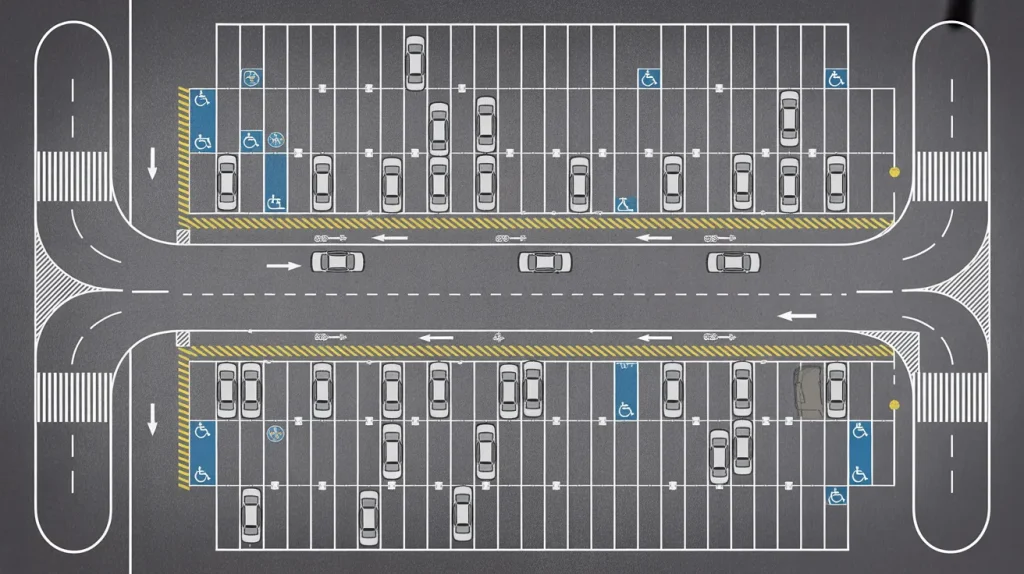
A car parking plan is a structured design that shows how vehicles will enter, move, park, and exit within a specific area. It helps improve traffic flow, maximize space usage, and maintain safety for drivers and pedestrians. This guide covers parking plan types, standard dimensions, common layouts, and practical design tips for residential, commercial, and public spaces.
Car Parking Plan Quick Overview
Purpose: Organize vehicle movement and parking efficiently
Best for: Residential, commercial, and public spaces
Main layouts: Parallel, perpendicular, angle, multi-level
Standard space size: Around 2.4m × 4.8m
Main benefit: Better traffic flow, safety, and space usage
What is a Car Parking Plan?
A car parking plan is a structured layout that shows how vehicles will be parked within a specific area. It includes the arrangement of parking spaces, driving lanes, entry and exit points, and pedestrian paths.
The purpose of a parking plan is to organize vehicle movement efficiently while making the best use of available space.
Parking planning is commonly used in:
- Residential homes and apartment buildings
- Shopping malls and commercial complexes
- Office buildings and business centers
- Public parking facilities such as airports or parks
A well-organized parking design improves convenience, reduces congestion, and lowers the risk of accidents in busy areas.
In space-limited areas, proper parking planning becomes even more important because the design must balance vehicle capacity, smooth movement, accessibility, and safety.
Car Parking Plans by Property Type
Different types of parking plans are used depending on the size of the area, the type of property, and traffic flow requirements.
Residential Car Parking Plan
A residential car parking plan is designed for houses, apartment buildings, and small residential communities.
These parking layouts usually focus on:
- Parking spaces for residents
- Limited visitor parking
- Safe access to building entrances
In houses, parking spaces may be located in garages, driveways, or small parking areas within the property. In apartment buildings, a larger car parking layout may be required to accommodate multiple residents.
Residential parking plans prioritize convenience and safety for residents.
Commercial Parking Plan
A commercial parking plan is used for business areas such as:
- Shopping malls
- Office buildings
- Hotels
- Retail complexes
These locations require larger parking lot design systems to handle high traffic volumes.
Commercial parking plans usually include:
- Multiple parking rows
- Clear traffic flow lanes
- Designated accessible parking spaces
- Separate entry and exit routes
Efficient parking design plans in commercial areas help prevent congestion and improve the overall visitor experience.
Public Parking Lot Plan
Public parking areas serve large numbers of vehicles and are often located in:
- Airports
- Stadiums
- Parks
- Transportation hubs
A public parking lot design must accommodate large vehicle capacity while maintaining safety and accessibility.
These layouts often include:
- Large parking zones
- Clearly marked driving lanes
- Directional signs and markings
- Pedestrian pathways
Public parking areas require careful parking area planning to manage heavy vehicle movement efficiently.
Standard Car Parking Space Dimensions
Proper dimensions are crucial when designing a car parking space plan. Parking spaces must be large enough for vehicles while allowing room for drivers to open doors and maneuver safely.
Typical Parking Space Size
A standard parking space typically measures:
2.4 meters × 4.8 meters
These dimensions provide enough room for most passenger vehicles.
Driving Lane Width
Driving lanes between parking rows should allow vehicles to move comfortably.
Typical driving lane widths include:
- Single-direction lane: around 3–3.5 meters
- Two-way lane: around 6 meters
Space for Turning
Vehicles need additional space to turn into parking spaces. This is especially important in areas with perpendicular or angled parking.
Following proper parking area planning standards ensures vehicles can park without causing obstruction.
Minimum Space Needed for a Car Parking Plan
The total space needed for a car parking plan depends on the number of vehicles, parking angle, lane width, and turning space. Small residential plans need less area, while commercial and public parking layouts require wider lanes, more circulation space, and better entry-exit planning.
Parking Layout Types
Parking areas can be designed using several different layouts depending on available space and traffic patterns.
Parallel Parking
Parallel parking places vehicles side by side along the curb or roadway.
This layout is commonly used on:
- Streets
- Narrow parking areas
Although it requires less width, parallel parking allows fewer vehicles compared to other layouts.
Perpendicular Parking
Perpendicular parking spaces are arranged at a 90-degree angle to the driving lane.
This is one of the most common vehicle parking layouts used in parking lots because it maximizes the number of vehicles that can fit in an area.
Perpendicular layouts are widely used in:
- Shopping centers
- Office parking lots
- Supermarkets
Angle Parking
Angle parking spaces are positioned at an angle (usually 45° or 60°) relative to the driving lane.
Advantages include:
- Easier vehicle entry
- Smooth traffic flow
Angle parking is often used in areas where quick parking and exiting are important.
Multi-Level Parking
In crowded urban areas where land is limited, multi-level parking structures are used.
These structures stack parking spaces vertically across several levels.
Multi-level parking lot designs help accommodate large numbers of vehicles without requiring large land areas.
Which Parking Layout is Best?
The best parking layout depends on the space available and the type of property. Perpendicular parking is usually best for maximizing capacity, angle parking helps improve flow and ease of entry, parallel parking works in narrow roadside spaces, and multi-level parking is ideal when land is limited.
Tips for Designing an Efficient Car Parking Plan
Designing an efficient car parking plan requires careful planning and consideration of vehicle movement and safety.
Here are some important tips:
- Ensure proper entry and exit points to avoid traffic congestion.
- Maintain wide driving lanes for easy vehicle movement.
- Use clear road markings and signs to guide drivers.
- Provide adequate turning space so vehicles can park comfortably.
- Consider pedestrian safety by adding walkways and crossings.
- Use lighting and visibility improvements to enhance safety at night.
- Plan accessible parking spaces for people with disabilities.
A well-organized parking design plan improves convenience and reduces accidents in busy areas.
Common Parking Design Mistakes
Poor parking designs often create blocked lanes, difficult turning areas, poor traffic flow, and unsafe movement for drivers and pedestrians. Common mistakes include narrow lanes, unclear markings, weak entry and exit planning, and not allowing enough turning space.
Frequently Asked Questions
Conclusion
A well-designed car parking plan plays an important role in managing vehicle movement and ensuring efficient use of space. Whether it is a residential driveway, a commercial parking lot, or a public parking facility, proper parking design helps reduce congestion and improve safety.
By understanding standard parking dimensions, choosing the right parking layout, and following smart design principles, property owners and planners can create organized parking areas that accommodate vehicles efficiently.
As cities continue to grow and the number of vehicles increases, effective parking area planning becomes even more essential. A thoughtful parking design not only improves traffic flow but also enhances the overall convenience and safety of any space.
Investing time in designing a proper car parking plan ensures long-term functionality, better organization, and a smoother experience for drivers and pedestrians alike.